Blue Whale Fact File
FAMILY: Balaenopteridae GENUS: Balaenoptera SPECIES: musculus
Blue whales are giant ocean wanderers of Southern and Northern Hemispheres. They are adapted for rapid, long-range movements between feeding areas that may be hundreds of kilometres apart, or feeding and breeding areas thousands of kilometres apart. Their cruising speed is around 20km/hr.
They are a very large, slender and streamlined whale. The single ridge on the top of head (called a rostral ridge) leads back to a prominent blowhole with a splashguard.
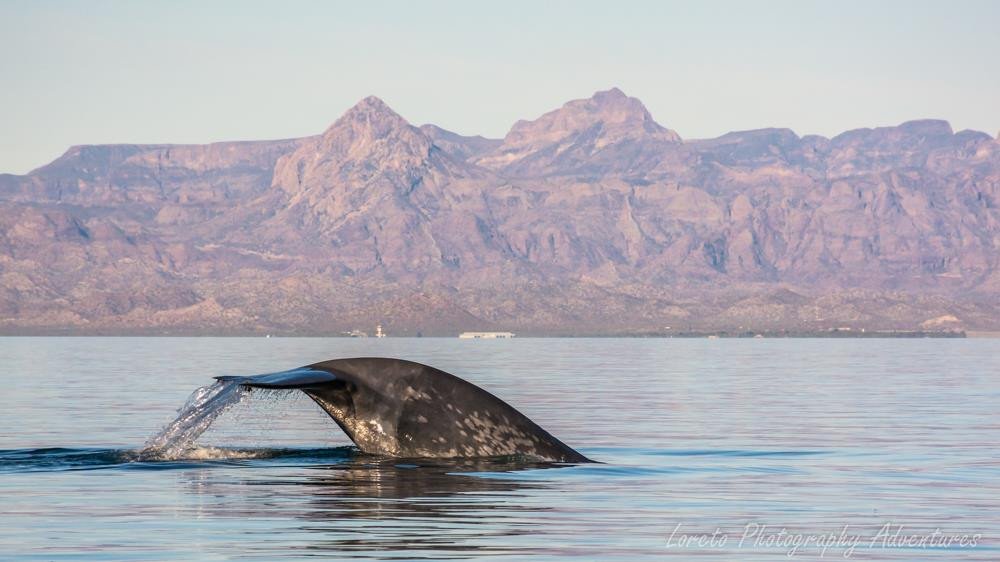
Their small dorsal fin, set well back on the body, enhances the impression of a very long back. Their grey skin is mottled with pigment patterns, but they appear aqua-blue when seen underwater. On their underside, longitudinal pleats allow the throat to expand massively as they engulf huge mouthfuls of krill.
They are the largest animal ever to live on earth!
The maximum length recorded for a female blue whale (the sub-species of blue whale that feeds in Antarctic waters), was 33.5m which is as long as a Boeing 737. The maximum adult weight recorded is 190 tonnes, equivalent to approx. 38 African elephants!
Blue whales may live for about 90 years. Newborn blues weigh between 2.5 and 4 tonnes and increase in size by 30 times in their first year of life. They belong to the rorqual (groove-throated) group of baleen whales (which includes Minke, Bryde’s, Omura’s, Humpback, Sei and Fin Whales). Their jet black baleen plates can be up to 1m in length.
Blue whales feed by gulping large quantities of krill. Estimates suggest that a blue whale weighing around 80 tons needs about 2 to 3 tons of food a day, which equates to millions of krill in one day. They are capable of diving up to 500m in depth when feeding, but usually feed in depths between 40-200m.
As specialist krill feeders, worldwide blue whales are usually found in upwelling or frontal zones with high productivity, such as the Bonney Upwelling. Even in these productive areas, krill are patchy in their distribution. Blue whales search vast areas in search of krill ‘hot spots’ , and upon finding them, they will remain to feed until this resource is exhausted.
We now think that if blue whales find a food resource that is far greater than the needs of an individual or small group, they will use their low-frequency calls to ‘call in’ their companions. Researchers call this ‘reciprocal altruism’, where favours will be returned.
Blue whales make the loudest sound of any animal, with their low-frequency calls being detected more than 1000km away under ideal conditions.
Blue Whale – Distinguishing Features
Colour: Silver-grey to grey-black with mottled patterns used to identify individuals. Appears pale blue or aqua when submerged.
Blow pattern: Blow is powerful, tall and straight, in calm conditions may exceed 20m and be heard 3 to 5km away.
Conservation Status
The devastating historical impacts of whaling, coupled with contemporary threats such as climate variability and change, ocean acidification, noise interference from marine industry and shipping, habitat modification, vessel disturbance through collisions and whale watching, and overharvesting of prey species (krill) have led to the same conservation status for blue whales in both the Northern and Southern Hemispheres:
ENDANGERED!